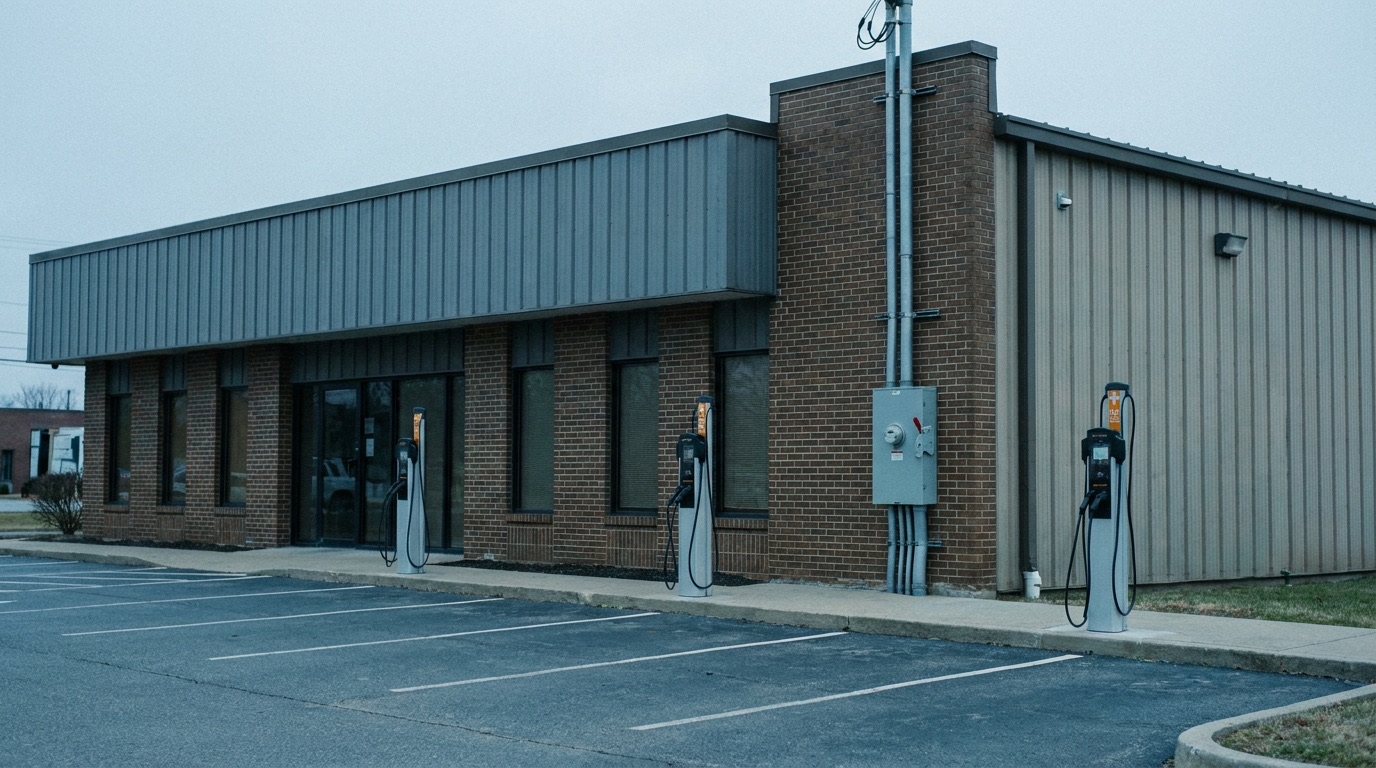
A service upgrade is the most expensive answer to the charging question — and often the wrong one. New switchgear, a utility transformer, trenching, and the interconnection queue can run well into six figures and add a year of lead time before a single charger goes live. So it’s worth knowing, before you commit to it, whether you actually need it.
A lot of the time, you don’t. The service has room you can’t see from the nameplate. The job is to find it, prove it, and use it.
Two ways to answer “is there room?”
There are two ways to size what a site can take, and they routinely disagree:
- The nameplate way. Add up the connected load, apply standard demand factors, compare to the service rating. Conservative, fast, and on an existing building usually pessimistic — it assumes a worst case that the site never actually reaches.
- The measured way. Read the real interval load, take the actual maximum demand, and size against that under NEC 220.87. This is the number that reflects how the building really behaves.
Picture a 400 A service that the nameplate math says is nearly full. Pull the interval data and the busiest fifteen minutes of the year might land near 60–70% of the rating. That gap — the difference between “rated” and “actually drawn at peak” — is measured headroom, and it’s frequently enough for a meaningful bank of Level 2 charging with no upgrade at all.
When headroom is tight, manage the load before you upgrade
Say the measured headroom doesn’t quite cover the chargers at full tilt. That still isn’t an automatic upgrade. An EV energy management system (EVEMS) — load management recognized by the code — lets the chargers share whatever capacity is free and throttle back when the building’s own load climbs. You size the chargers to the headroom you have and let software hold the ceiling, instead of paying the utility to raise it.
For a depot that charges overnight when the rest of the site is quiet, managed charging often turns a “we need an upgrade” into a “we’re fine as-is.”
Don’t forget the demand charge
Capacity isn’t the only thing that moves. Add load without knowing your coincident peak and one busy hour can set a new demand charge that follows you for a whole year — quietly eroding the fuel savings the whole plan was built on. Reading demand exposure at the meter before the invoice is what lets you sequence charging instead of discovering the number after the fact.
Find out before you commit capital
The party that should tell you what your service can take isn’t the party selling you the chargers. An independent capacity check gives you your own evidence-backed headroom range — and a permit-ready package you can hand to the utility, the AHJ, and finance.
Start with a free capacity check: send the bills, utility data, and panel photos you have, and get a conservative headroom range, the missing evidence, and a permit-ready approval path. Or run the numbers yourself with the free headroom calculator to see roughly how many chargers your service could take today.
This is general information, not engineering or legal advice. Whether a site needs a service upgrade depends on its measured load, local code as adopted by your Authority Having Jurisdiction, utility rules, and the equipment specified. Figures and examples here are illustrative, not a guarantee.